- Open 24/7, Monday to Sunday
- Serving Lancaster County
Project fit
Lancaster projects need more than open space
These common rental uses fit Lancaster homes, rowhomes, commercial properties, and renovation sites. The truck still needs a safe approach and a level placement area.
House Cleanout Dumpsters
For Lancaster rowhome cleanouts, plan around narrow stairs, shared entries, parked vehicles, and limited curb space. Keep furniture and bagged material inside the container without stacking above the top edge.
Home cleanoutsGarage and Basement Cleanouts
Lancaster garages and basements often hold dense, heavy loads rather than bulky volume. Sort appliances, shelving, and household debris first, then confirm whether stairs, alley access, or a low doorway affects loading.
Dense household debrisMoving and Estate Cleanouts
Moving and estate work in Lancaster can combine furniture, boxes, fixtures, and older household materials. Reserve a placement area that does not block the home entry, shared drive, alley, or neighboring access.
Moving projectsRoofing Debris Dumpsters
Roof work on Lancaster’s older homes requires a stable location close to the tear-off area without blocking scaffolding or pedestrian space. Keep shingles contained and tell us about access, roof pitch, and staging limits.
Roofing workYard Waste Dumpsters
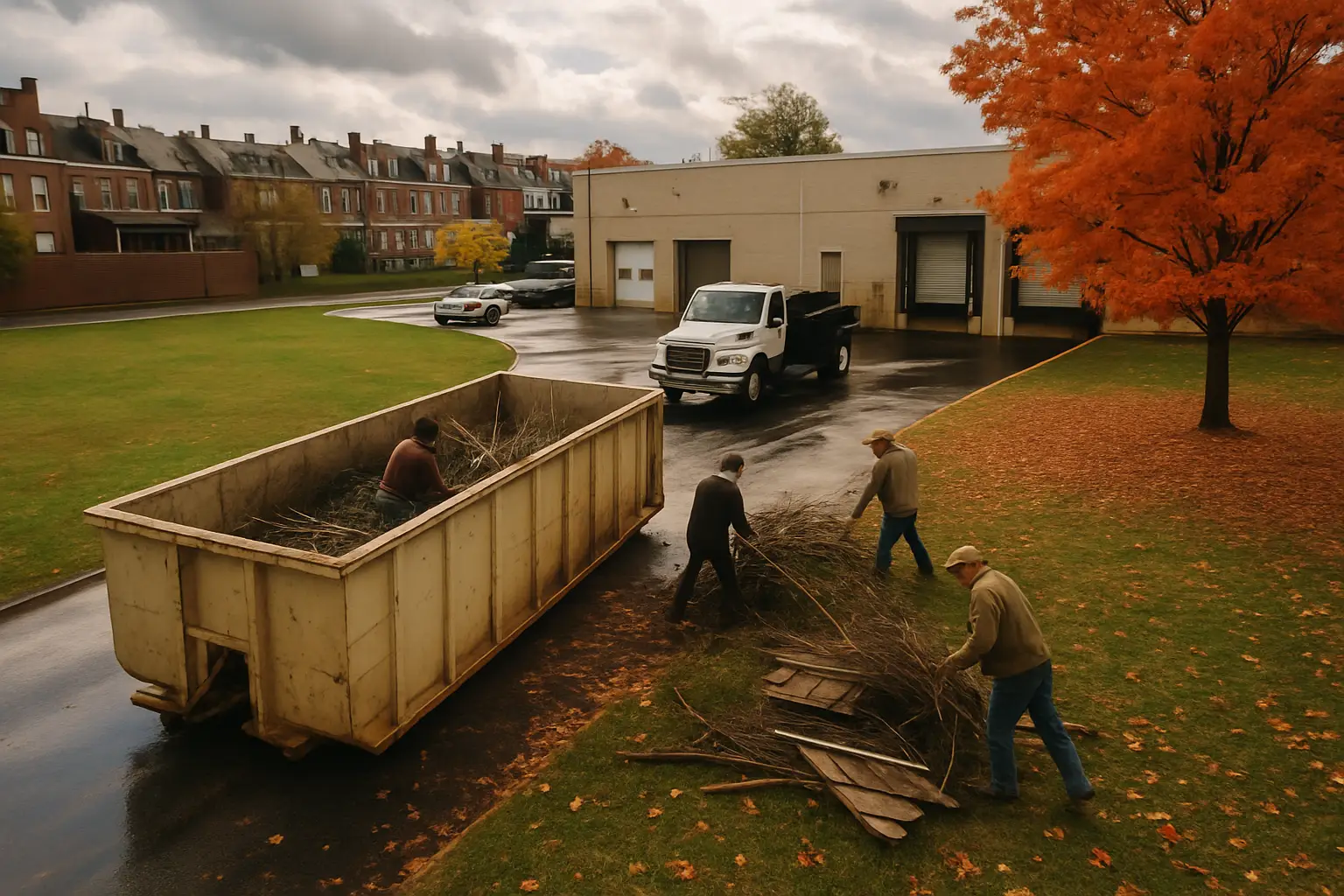
For Lancaster yards, branches, brush, and soil can become heavy quickly, especially after wet weather. Keep material free of prohibited items, avoid mixing excessive soil with light debris, and protect soft lawn edges.
Yard projectsRenovation Debris Dumpsters
Kitchen, bath, and room renovations in Lancaster rowhomes often produce dense material with limited handling space. Separate concrete, brick, and other heavy debris from general waste and confirm the floor or driveway can support loading.
Remodel debris
Seasonal planning
Lancaster weather affects loading and placement
Lancaster’s wet springs can turn grass shoulders and unpaved side access into soft ground, so a container should stay on a firm surface whenever possible. Summer thunderstorms can interrupt roofing and exterior work, leave cardboard and loose debris saturated, and send water toward a low driveway. Keep the container covered only when safe and appropriate, never add material above the rim, and clear standing water from the approach. In dense city blocks, storms also make curbside visibility and pedestrian clearance more important. A placement plan made before rain is more useful than moving a container after the ground has softened.
Winter freeze and thaw can open cracks in older pavement and create uneven approaches around Lancaster homes. Ice or packed snow may hide the boards, curb, or edge where the truck needs to set down the container. Schedule with enough flexibility for weather affected work, especially roofing, masonry, and exterior renovations. During loading, distribute material rather than dropping all the weight at one end. If conditions change, describe the surface and access when arranging service so the driver can review the safest practical placement.
Lancaster conditions
Lancaster streets can change container placement
Lancaster’s older rowhome blocks often have limited frontage, shared driveways, alleys, parked cars, and sidewalks that leave little room for a container. A location that looks open from the street may block a neighbor’s access, interfere with a garage swing, or require the truck to approach at an angle. We discuss the property before delivery and identify whether the container can sit on private pavement, a driveway, or another workable surface. If it must sit on a public street, town permission may apply, so tell us the exact location before scheduling.
The city also mixes dense residential blocks with commercial corridors, larger properties, and changing road conditions. Lancaster’s older pavement and narrow approaches call for careful placement, especially where a truck needs room to lower a container without contacting a curb, wall, fence, or overhead obstruction. Driveway protection boards are used as part of the placement plan. Have the property address, preferred container location, surface type, and any alley or gate restrictions ready when you speak with Calvin Dumpster Rental.
Weather can affect both loading and access. Wet spring ground can soften unpaved edges, summer storms can push water and loose material toward a container, and winter freeze and thaw can make older pavement uneven. Snow, ice, and leaf buildup may also hide the edge of a driveway or reduce turning room. Lancaster projects are easier to schedule when the container location is cleared first. Keep debris below the fill line, avoid loading against the doors, and mention any roof work, concrete, soil, or other heavy material before the container is assigned.
Before delivery
Prepare the Lancaster site before dispatch
- Clear Lancaster driveways, alleys, and curb space of vehicles before the scheduled container placement.
- Measure the Lancaster access route for gates, low branches, wires, parked cars, and narrow rowhome approaches.
- Tell us whether the container will sit on pavement, a driveway, grass, or a public street.
- Separate concrete, brick, soil, and roofing material before loading the Lancaster project container.
- Keep debris below the rim and leave the doors, sidewalks, and neighboring access unobstructed.
Common questions
Answers for Lancaster dumpster rentals
What size dumpster should I rent for a Lancaster rowhome project?
A 10 Yard container often suits a bathroom or small room cleanout, while a 15 Yard container handles a garage or moving project. Larger remodels, roofing work, estate cleanouts, and construction debris may need 20 Yard or 30 Yard capacity. Lancaster rowhomes can limit placement, so describe the debris and access before choosing. Clear stairs, alleys, and the driveway area before delivery.
Can a dumpster sit on a Lancaster street?
A container on a public Lancaster street usually needs town permission first, and the exact location may affect what applies. Private driveways and other private surfaces are often simpler when they are firm, level, and accessible to the truck. Give us the address, side of street, and placement details before scheduling. Keep curb space clear and ask about any local approval required.
How do you protect a Lancaster driveway during delivery?
Calvin Dumpster Rental uses driveway protection boards as part of the placement plan, while the driver checks the approach, surface, slope, and clearance before setting the container down. Protection cannot correct a weak, cracked, or obstructed surface. Lancaster’s older pavement and tight approaches deserve extra attention. Remove vehicles and identify fragile edges, gates, walls, and overhead obstacles before delivery.
How quickly can I get a dumpster in Lancaster?
Scheduling depends on container size, current routing, access, and whether the Lancaster location needs special approval. Calvin Dumpster Rental is available 24/7, Monday to Sunday, but availability does not guarantee an immediate arrival. Have the address, project type, preferred placement, debris type, and requested rental timing ready so the route can be reviewed accurately.
What cannot go in a Lancaster dumpster?
Rules vary by disposal facility and material, so hazardous substances, liquids, certain appliances, tires, batteries, and other restricted items should be identified before loading. Lancaster renovation debris also needs separate discussion when it includes concrete, soil, brick, or unusually heavy material. Keep restricted items aside, do not mix unknown chemicals with household debris, and describe every unusual material before service.

Describe the Lancaster job before scheduling
Have the Lancaster address, debris type, container size you are considering, surface, access route, and preferred placement ready. Calvin Dumpster Rental can review the practical details and explain which option fits without pushing a larger container than the project needs.
Click Here to Call(717) 573-8029Local routes
Lancaster coverage follows streets and access
Calvin Dumpster Rental dispatches from Strasburg to Lancaster properties, including dense residential blocks, older rowhome streets, commercial corridors, and surrounding neighborhoods. Access varies sharply from one block to the next, so the address and exact container location matter more than a broad service-area label. Tell us about alleys, shared drives, curb placement, and road restrictions before scheduling. Service is available 24/7, Monday to Sunday, subject to safe access and container availability.